http://sevencamels.blogspot.com/2010/09/quick-primer-on-values.html
http://sevencamels.blogspot.com/2012/01/tones-values-and-using-them-and-your.html
http://evanerichards.com/2012/2794
http://evanerichards.com/2012/2789
http://evanerichards.com/2012/2736
Friday, February 15, 2013

Monday, February 11, 2013
Film clips
Ways to safely cross 180:
Creating and re-establishing new 180 lines:
http://www.youtube.com/watch?v=qTIc6y5mojw&feature=share&list=PL8F3444EC493C0C85
180 degree triangle:
http://www.youtube.com/watch?v=EFgCZDRkacU&feature=share&list=PL8F3444EC493C0C85
180 degree rule CAN be broken intentionally...
http://en.wikipedia.org/wiki/180-degree_rule
http://www.brighthub.com/multimedia/video/articles/60379.aspx
Paprika explains the 180 degree rule:
http://www.youtube.com/watch?v=e9xD_YYZrbA&feature=share&list=PLIxpDLIQpXvN5tJaBijnngE25u305l-hU
American Beauty:
http://www.youtube.com/watch?v=Vt0rz5iPuaA
http://www.youtube.com/watch?v=qw0kuEG7NR8&list=PL7B08A44C4D74CF75
No Country for Old Men (framing, pacing, camera push-in):
http://www.youtube.com/watch?v=d1U3MyX0pmE&list=PL0871E80F80989E56
breakdown and board ( 1:15 - 2:12 )
http://www.youtube.com/watch?v=fBqbMZ23n5o&list=PL0871E80F80989E56
The Godfather - note camera push in right before shooting:
http://www.youtube.com/watch?v=ppjyB2MpxBU
Amelie - puts camera in the mental space of the blind man:
http://www.youtube.com/watch?v=Wuntz3KDIAk&list=PL0CBD56D41228F70F&index=2
Midnight in Paris:
http://www.youtube.com/watch?v=Ln6Mdjs6dEE - separation of characters
Billy Ellliot - reveal of info:
http://www.youtube.com/watch?v=i0p2X2rQ6Ag (0:55 - 1:20)
2001: reveal of info:
http://www.youtube.com/watch?v=1s-PiIbzbhw
- Camera crosses the line
- Actor crosses the line
- New actor enters the scene and establishes new line
Creating and re-establishing new 180 lines:
http://www.youtube.com/watch?v=qTIc6y5mojw&feature=share&list=PL8F3444EC493C0C85
180 degree triangle:
http://www.youtube.com/watch?v=EFgCZDRkacU&feature=share&list=PL8F3444EC493C0C85
180 degree rule CAN be broken intentionally...
The Matrix subway fight (0:00 - 1:50)
http://en.wikipedia.org/wiki/180-degree_rule
http://www.brighthub.com/multimedia/video/articles/60379.aspx
Paprika explains the 180 degree rule:
http://www.youtube.com/watch?v=e9xD_YYZrbA&feature=share&list=PLIxpDLIQpXvN5tJaBijnngE25u305l-hU
American Beauty:
http://www.youtube.com/watch?v=Vt0rz5iPuaA
http://www.youtube.com/watch?v=qw0kuEG7NR8&list=PL7B08A44C4D74CF75
No Country for Old Men (framing, pacing, camera push-in):
http://www.youtube.com/watch?v=d1U3MyX0pmE&list=PL0871E80F80989E56
breakdown and board ( 1:15 - 2:12 )
http://www.youtube.com/watch?v=fBqbMZ23n5o&list=PL0871E80F80989E56
The Godfather - note camera push in right before shooting:
http://www.youtube.com/watch?v=ppjyB2MpxBU
Amelie - puts camera in the mental space of the blind man:
http://www.youtube.com/watch?v=Wuntz3KDIAk&list=PL0CBD56D41228F70F&index=2
Midnight in Paris:
http://www.youtube.com/watch?v=Ln6Mdjs6dEE - separation of characters
Billy Ellliot - reveal of info:
http://www.youtube.com/watch?v=i0p2X2rQ6Ag (0:55 - 1:20)
2001: reveal of info:
http://www.youtube.com/watch?v=1s-PiIbzbhw
Saturday, February 9, 2013
Line and Shape
edge, contour, closure, intersection of planes, imita- tion through distance, axis, and track.
Edge - edge of a 2d surface creates the line. Only visible if there is tonal or color contrast to pop it out.
examples: sheet of white paper against black, shadows cast on wall
Contour - the apparent line around the border of a 3d object
Closure - connect the dots, etc. Viewers create lines through connecting dots on screen
Intersection of planes - When two planes meet, they appear to form a line
Imitation through distance - complex objects recede into lines at a distance
Axis - invisible axis that runs through people, objects, etc
Track - the path an object makes as it moves across the screen
Linear motif - any pic can be reduced to simple lines. A pic's linear motif can be circular, straight, horiz, vert, or diagonal, or any combination of.
Horizontal - calming, least intense of all line motifs
Verticial - authoritarian, more intense
Diagonal - dynamic, most intense of all line motifs
Straight lines:
- direct
- aggressive
- bland
- honest
- industrial
- ordered
- strong
- unnatural
- adult
- rigid
Curved lines:
- indirect
- passive
- natural
- childlike
- romantic
- soft
- organic
- safe
- flexible
- Actors - when reduced to silhouette, what are the basic shapes?
- Scenery
- Set dressing - furniture, etc
- Simplify
Shapes:
2D:
3 basic shapes - circle, square, equilateral triangle
3D:
3 basic shapes - sphere, cube, 3 sided pyramid
All objects/shapes can be reduced to these basic shapes
Circle - benign, innocent, cute
Square - less cute than circle, rigid
Triangle - most dynamic of the shapes, because:
1. contains diagonal
2. Can be used to POINT in a direction - it's an arrow!
triangles often are described as bold, aggressive, dynamic, angry, menacing, scary, chaotic, disorienting, and unorganized
Contrast and affinity - circle and triangle have maximum contrast
Creating a linear motif storyboard to help discover/plan contrast/affinity in your shots
Monday, February 4, 2013
Space
SPACE
- Deep
- offers illusion of 3d depth on a 2d screen
- no real depth in screen space, illusion is conveyed through depth cues
- perspective - 1, 2, and 3 point (draw buildings)
- perspective creates VANISHING POINTS and LONGITUDINAL PLANES
- Audience's eye will be usually drawn to and on-screen vanishing point (
- draw railroad tracks)
- draw two vanishing planes, with actor on outside, then actor on inside, at VP. Compare the two.
- size difference
- separating objects/actors into FG, MG and BG helps create depth
- movement
- moving parallel to the picture plane:
- objects further away will appear to move slower across screen
- objects closer will appear to move faster
- draw track runners to demonstrate
- moving perpendicular to picture plane
- objects appear to move faster the closer they are to the camera
- camera movement
- dolly in/out = moving camera closer or farther from the subject
- draw scene with FG actor and two BG actors, then dolly in
- FG actor will get larger faster
- tracking shot - camera dollies left/right
- with one FG and three BG actors, FG actor appears to move faster horizontally in screen space.
- crane shot - camera is moved vertically up or down.
- same FG/BG actor combo - FG actor will drop out of frame faster than BG guys
- Textural diffusion
- objects that are closer to the camera will have more visible texture
- Arial diffusion
- fog
- must have objects affected and unaffected in both the same shot in order to be an effective depth cue
- Tonal separation
- light objects generally appear closer, dark objects generally recede
- can also be reverse, depending on lighting and arial diffusion
- Color seperation
- warm colors generally appear to be closer
- cool colors generally appear to be further away
- Up/Down position
- objects lower in the frame appear to be closer than objects higher in the frame (maybe because they appear more accessible?)
- Overlap
- overlapping objects in the frame create depth
- Focus
- blur vs sharp
- Flat
- emphasizes the 2d aspects of the screen space
- flat cues:
- frontal planes and NO LONGITUDINAL PLANES
- size consistency
- movement
- movement parallel to picture plane = good
- camera movement - pans, tilts and zooms
- help emphasize flat space because the relative distance between/size of objects does not change in the shot.
- textural affinity
- same amount of textural detail
- reduced tonal seperation
- reduced color separation (affinity of color)
- reduced overlapping shapes
- inverted depth cues
- inverting or reversing depth cues can help flatten deep space
- tone: placing brighter obis in the BG and darker ones in the FG
- color: warm BG, cool FG
- textural diffusion: make BG obis have more texture and FG ones have less
- size difference: place larger objs farther away, and small ones closer.
- Limited
- combo of deep and flat space cues
- Ambiguous
- occurs when viewer is unable to understand the actual size/spatial relationships between objects in the frame
- lack of movement -
- objects of unknown size or shape
- tonal and textural camouflage
- mirrors and reflections
- disorienting camera angles
- DEEP SPACE
- dramatic
- exciting
- edgy
- can be used to release tension
- FLAT SPACE
- calming
- comedic
- disarming
- can be used to build tension/claustrophobia and awkwardness
- wes anderson!
- LIMITED
- combo of both
- AMBIGOUS
- mysterious
- disorienting
- chaotic
Sunday, February 3, 2013


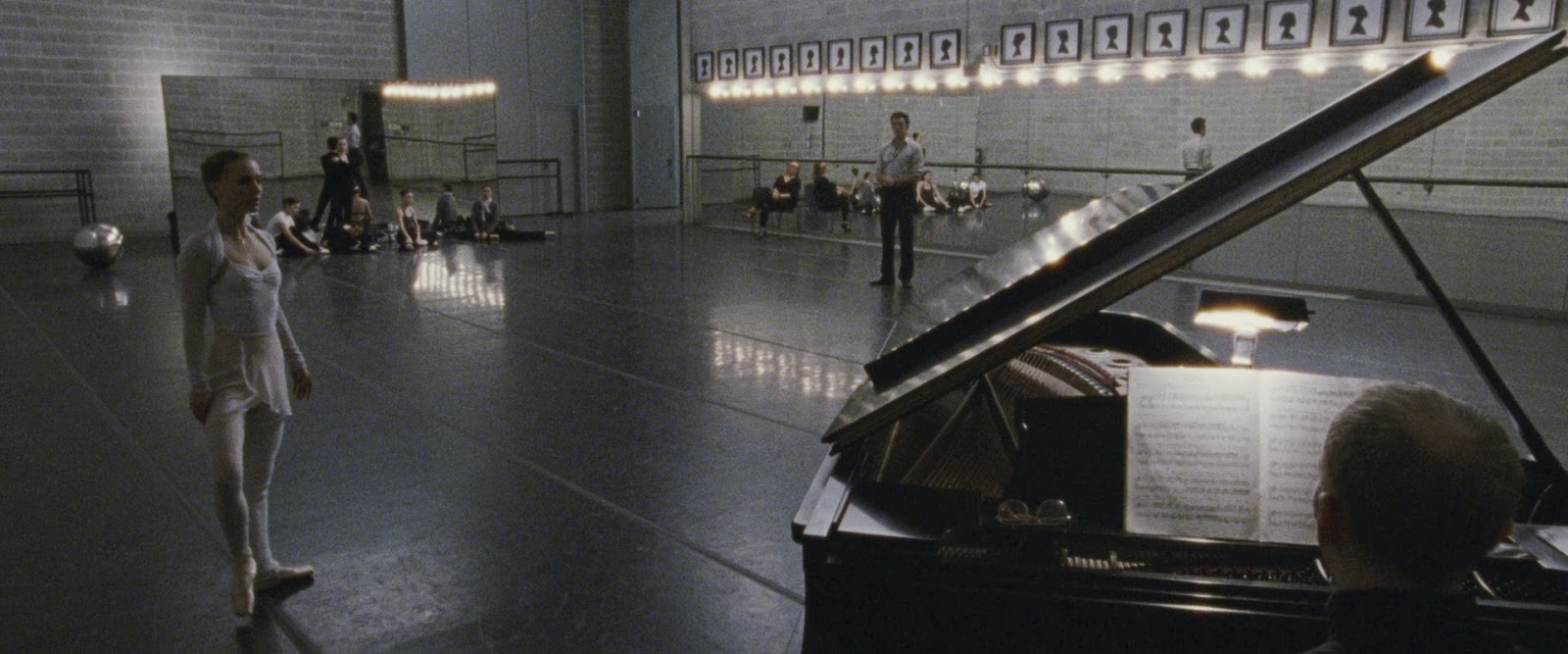


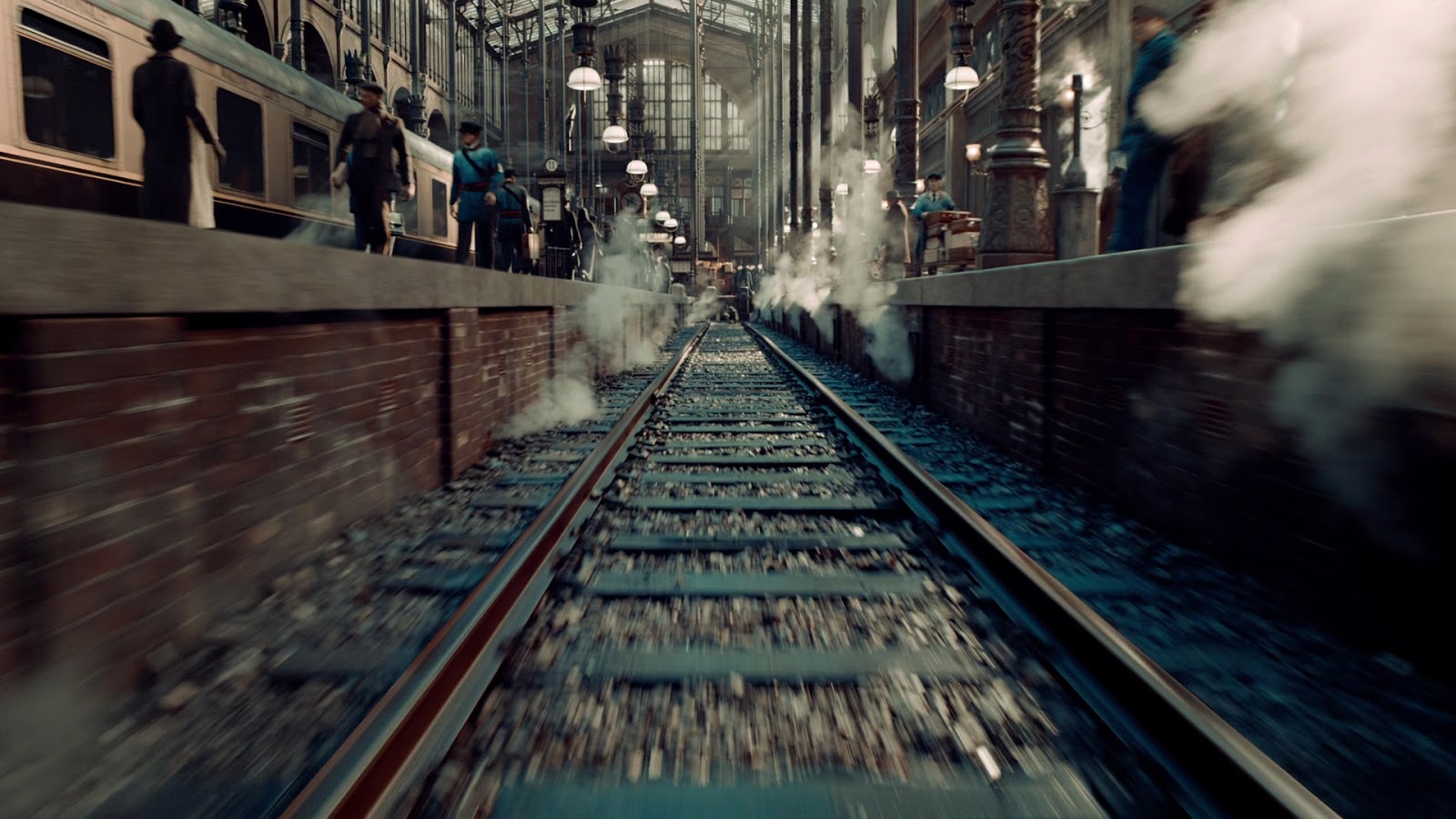


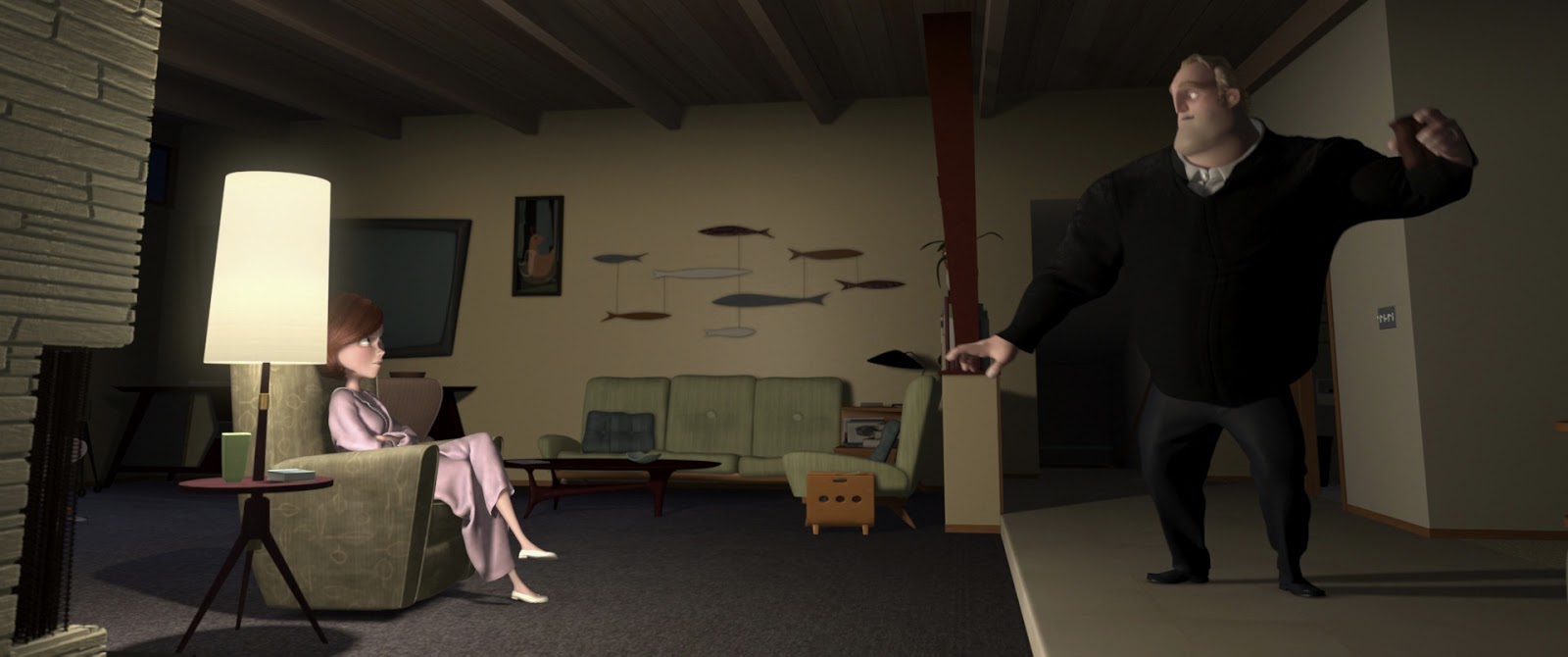


Tuesday, January 29, 2013
Sunday, January 27, 2013
movieclips youtube channel
Tons and tons and tons of viewable clips from amazing films....all on youtube!!!
Sneakers
- This scene involves two characters having a conversation about changing the world. As the sequence begins, we realize that they are under surveillance. They move to a smaller room to continue the dialog.
- First two shots are closeups of the actors, then we go to wide shots as the actors lead us into the "safe" area. The camera pulls back to a very wide shot, before cutting inside the room to a series of closeups and OTS shots.
- The color scheme changes as the characters enter the "safe" area. Blue is used for the area where they can't talk out loud, red and neutral are used in the safe area.
- The tone changes as well. Unsafe area = dark tones, safe area = bright tones.
- The "safe" area is where Ben Kingsley's character explains his seemingly benevolent plan to Redford's character.
Cider House Rules
http://www.youtube.com/watch?v=JES2fQLPoGU&feature=share&list=PL1E9342504260D7F2
- This is a time-lapse sequence involving Toby M's character reading through a series of letters he has received/sent.
- Fades are used to signify the passage of time between shots.
- In addition, at the end of each shot, the focal element in the shot is framed in a way that it spacially overlaps the focal element in the NEXT shot.
Pi
http://www.youtube.com/watch?v=SzfQ2Bwhkcc&list=PL1E9342504260D7F2&index=116
- This is a moment of discovery for the main character. He is about to discover a nautilus shell, which will inspire him to mathematically decode the stock market.
- The first shots are super-high contrast in tone.
- The shots are also ambiguous in their framing. We are in a disorienting, yet inspiring space with the character.
- As the sequence continues, we are put into a more recognizable space, when the main character sees the treasure hunter inspecting the nautilus shell.
- Note how the director chooses to SHOW the main character LOOKING at the hunter/nautilus shell, and then cross cuts to shots of what he is looking at.
Jurassic Park 3
http://www.youtube.com/watch?v=M7tNqjsclhs&list=PLF4CD53B8ECA3BB87&index=1
- Tons of deep space in this shot.
- The camera work during the dino fight is made to feel as though a documentary filmmaker is there. Just enough camera movement to sell the presence of the camera, not so much to distract from the animation.
- There are several shots where one element is in the shot (human running away), and they react to something off-screen (falling dino), which then enters the frame. Very cool!
The Shining
- The flatness of the shot = super awkward.
- Going from framing Danny far away to super closeup = awkward/jarring
- Letting Danny lead the camera around the corner to reveal the girls heightens the audience's suspense.
- Danny's sweater is one of the most color saturated elements in the scene - blood red
- The close up non-moving camera on Danny's reaction to the girls heightens the horror - he is literally paralyzed with fear.
Subscribe to:
Posts (Atom)